
 EN
EN
 AR
AR BG
BG HR
HR CS
CS DA
DA NL
NL FR
FR DE
DE EL
EL HI
HI IT
IT JA
JA KO
KO NO
NO PL
PL PT
PT RO
RO RU
RU ES
ES SV
SV CA
CA TL
TL IW
IW ID
ID LT
LT SR
SR SK
SK UK
UK VI
VI SQ
SQ ET
ET HU
HU TH
TH TR
TR FA
FA AF
AF MS
MS KA
KA BN
BN



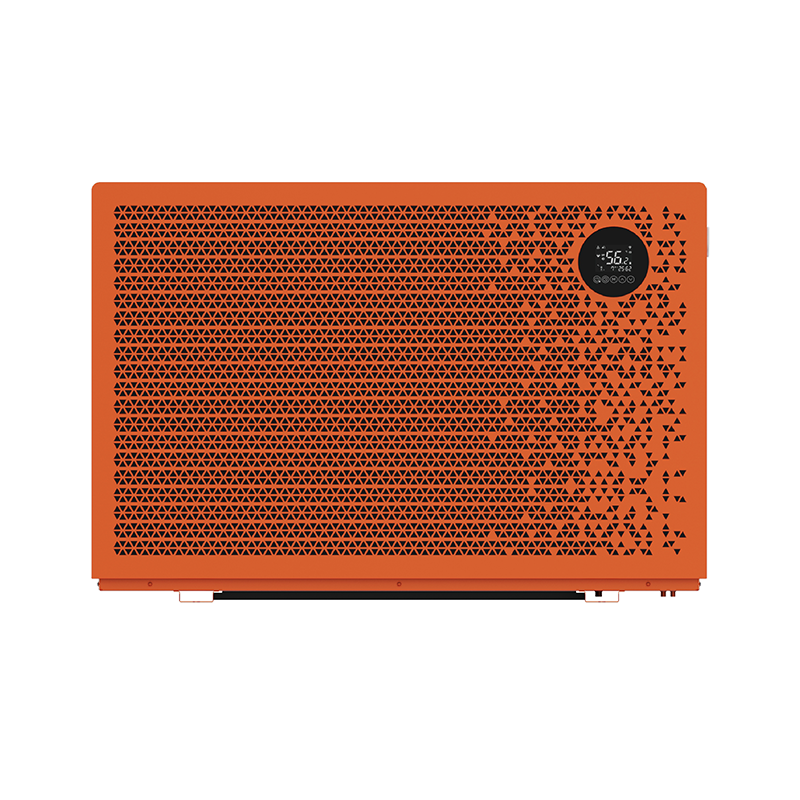
Why This Decision Matters for Your Commercial Project
Selecting a swimming pool heat pump supplier is far more than a price comparison exercise.
For resort owners, hotel operators, villa developers, and commercial pool facility managers, a pool heat pump—once installed—operates around the clock. This decision directly impacts guest satisfaction, operational costs, and long-term maintenance expenses. Many buyers have encountered costly pitfalls after project deployment: winter heating degradation leading to substandard water temperatures, corrosion of heat exchangers in chlorinated water, spare parts delivery lead times stretching to 45 days, and COP values quoted on spec sheets that fall significantly short in real-world operation. These issues drive up annual operating budgets, cause frequent fluctuations in pool water temperature, and ultimately translate into guest complaints and negative reviews.
The global inverter swimming pool heat pump market was valued at approximately $2.1 billion in 2024 and is projected to grow to $2.8–$2.9 billion by 2031, representing a compound annual growth rate of around 5%. Behind this industry growth lies a clear market logic: commercial properties are accelerating the transition from gas boilers and fixed-speed electric heating systems to inverter heat pump technology. However, market expansion also means a mixed landscape—small assembly shops operating alongside established manufacturers with in-house R&D and production capabilities. B2B buyers need a quantifiable set of screening criteria to mitigate selection risks.
Five Essential Questions to Ask Before Requesting a Quote
Before asking any heat pump manufacturer for a price quotation, clarify these five questions. The quality of the answers will determine your operational experience for years to come.
First, can the manufacturer provide third-party test reports for low-temperature heating performance of their integrated inverter swimming pool heat pumps? Can the equipment operate stably at -15°C ambient temperature to suit outdoor pool projects in high-latitude regions such as Scandinavia and Canada? Some manufacturers only supply data under ideal laboratory conditions—the actual performance degradation in real low-temperature environments is the critical factor for procurement decisions.
Second, does the pool heat pump feature a titanium alloy corrosion-resistant heat exchanger? Can it adapt to the long-term operational requirements of saltwater pools and chlorinated pools? Standard copper or copper-nickel alloy heat exchangers can suffer perforation and failure within 2–3 years in seawater or high-chlorine environments. Titanium alloy is a mandatory specification for commercial seawater pool projects.
Third, what is the official warranty period for the complete unit and the compressor? Does the manufacturer have overseas after-sales warehouses and can they expedite spare parts dispatch? For hotel projects, downtime exceeding one week for repairs translates directly to revenue loss and guest complaint risks.
Fourth, are there completed hotel pool heat pump projects with real operational energy consumption data available for reference? Request traceable project case studies and actual operational data rather than relying solely on nominal parameters printed in product brochures.
Fifth, does the manufacturer support batch OEM/ODM customization of pool heat pumps, including refrigerant type modification (R32/R290)? For contractors and distributors, flexible customization capability means broader market adaptability.
Quantifiable Criteria for Vetting Reliable Heat Pump Manufacturers
Evaluate potential suppliers against these four dimensions to avoid most hidden risks in your procurement decision.
In-House Large-Scale Manufacturing Base, Not OEM Assembly
A quality commercial heat pump brand must possess its own large-scale manufacturing facility. Micoe—a global leader in new energy—operates an 800,000m² intelligent manufacturing base covering independent R&D workshops for inverter swimming pool heat pumps, integrated heat pumps, commercial and residential hot water heat pumps, heating and cooling heat pumps, and solar water heating systems. From compressor matching and heat exchanger welding to intelligent controller debugging, all processes are developed and produced in-house, eliminating quality control risks associated with outsourced assembly.
Real Heating Performance Under Low-Temperature Conditions
For commercial projects in northern regions, stable operation in extreme cold is a non-negotiable performance indicator. Micoe pool heat pumps have received authoritative certification for extreme cold operation in Mohe, China—the country's coldest region—and continue to deliver stable heat output even at -40°C. For hotel pool projects in cold-climate markets such as Germany, Poland, and Russia, the annual system Seasonal Performance Factor (SPF) consistently exceeds 3.8—surpassing the industry average of 3.1–3.4 for standard inverter pool heat pumps.
Reliable After-Sales Support System
For B2B clients, the priority is not the purchase price but the total cost of ownership over the equipment's full lifecycle. Micoe provides a 2-year whole-unit warranty, a 3-year extended warranty on the compressor and key components, and routine spare parts dispatch within 7 working days—effectively minimizing business disruption caused by extended repair downtimes in hotel pool operations. Additionally, Micoe's engineering team conducts at least four overseas business trips annually to core markets including Europe, North America, and Southeast Asia, providing on-site technical support and client visits to ensure after-sales responsiveness goes beyond email correspondence.
Traceable Project Track Record
Project case studies and operational data are the most persuasive proof of capability. Micoe pool heat pumps are now sold in over 100 countries and regions across Europe, South America, Asia, and South Africa, establishing Micoe as a leading Chinese factory supplier and exporter in the pool heat pump sector.
Benchmark Case Study: Four-Star Resort Hotel Indoor Pool Project in Beijing
A four-star resort hotel in Beijing with an indoor pool volume of 720m³ replaced its aging gas-fired heating system with seven Micoe inverter swimming pool heat pump units.
Data collected after one full year of operation:
Annual energy savings on pool heating: USD 153,000
Water temperature fluctuation: maintained within ±0.5°C
Guest complaints related to insufficient pool water temperature: completely eliminated
The significance of this data lies in its demonstration that inverter swimming pool heat pumps can simultaneously deliver substantial cost savings and consistent user experience in real commercial settings.
At the Canton Fair, Micoe's pool heat pump products attracted significant order commitments from European and Australian buyers, driven by exceptional energy efficiency and stable operational performance—underscoring strong market demand for high-quality pool heat pumps.
Why You Should Evaluate COP Data Under "Rated Conditions" Rather Than "Laboratory Conditions"
Many buyers are easily drawn to the exceptionally high COP figures printed on product brochures. However, truly professional procurement requires reviewing actual COP measurements under rated conditions (ambient temperature 15°C, water temperature rising from 26°C to 28°C)—not peak values achieved under ideal laboratory conditions (ambient temperature 26°C).
Micoe pool heat pumps absorb heat from the surrounding air and transfer it to the pool water via the compressor, achieving a COP of 6 to 7—and up to 10 in tropical regions. This means each kilowatt-hour of electricity generates 6 to 10 kilowatt-hours of heat, reducing heating costs to one-fifth of traditional methods. At the Canton Fair, international buyers responded positively to Micoe's demonstrated technology, citing its mature performance, outstanding energy efficiency, strong value proposition, and notable competitiveness in temperature accuracy and low-temperature adaptability.
Partnership Models Open to B2B Partners
Micoe offers diverse collaboration channels for pool contractors and distributors worldwide:
Wholesale distribution of inverter swimming pool heat pumps
Total pool heating solutions for hotel and villa projects
Integrated off-grid resort solutions combining high-voltage lithium batteries, photovoltaic systems, and pool heat pumps for zero-energy pool heating
For commercial inverter swimming pool heat pump technical specifications, pricing, project heat load calculations, or factory audit arrangements, please contact Micoe through our official global website for comprehensive project support.
FAQ: Common Questions from Hotel and Villa Developers
Q: How do I calculate the required heat pump capacity for my pool?
A: As a general rule, outdoor pools require approximately 1kW of heating capacity per 3m³ of water volume. For a 30m³ outdoor pool, a minimum 10kW unit is recommended. Indoor pools, with reduced heat loss, require approximately 1kW per 4m³. Always consult the manufacturer for precise sizing based on your specific climate conditions and pool configuration.
Q: What is the typical lifespan of an inverter swimming pool heat pump?
A: With proper maintenance—including annual servicing, debris clearing, and refrigerant checks—quality inverter units from established manufacturers such as Micoe can last 12 to 15 years. The Mitsubishi DC inverter compressor is specifically designed for continuous modulation, which reduces mechanical stress compared to fixed-speed units that frequently start and stop, thereby extending service life.
Q: Can the unit be installed indoors?
A: Most commercial units—including the MSHP Series—are designed for outdoor installation with IPX4 waterproof ratings. If adequate ventilation is available, they may also be installed in equipment rooms, provided there is sufficient airflow and clearance. Please refer to the installation manual for specific requirements.
Q: What is the difference between inverter and non-inverter models?
A: Inverter technology continuously adjusts compressor speed based on actual heating demand—more like the accelerator of a car than an on/off switch. This delivers up to 40% energy savings, quieter operation, constant water temperature without fluctuations, and longer equipment lifespan. Non-inverter units start and stop at full power, wasting energy and causing temperature swings.
Contact Micoe for Your Commercial Pool Heating Solution
Ready to upgrade your hotel or villa pool heating system? Contact the Micoe sales team and provide your project details:
Project type: hotel / resort / villa / commercial facility
Pool volume: in m³
Local climate conditions: including minimum winter temperature
Installation site constraints
We respond to all inquiries within 24 hours with a tailored solution, formal quotation, and detailed technical datasheet.
Table of Contents
- Why This Decision Matters for Your Commercial Project
- Five Essential Questions to Ask Before Requesting a Quote
- Quantifiable Criteria for Vetting Reliable Heat Pump Manufacturers
- Benchmark Case Study: Four-Star Resort Hotel Indoor Pool Project in Beijing
- Why You Should Evaluate COP Data Under "Rated Conditions" Rather Than "Laboratory Conditions"
- Partnership Models Open to B2B Partners
- FAQ: Common Questions from Hotel and Villa Developers
- Contact Micoe for Your Commercial Pool Heating Solution